Our Religious Education and World Views Curriculum
At Coberley C of E Primary, Religious Education and World Views (RE &WV) is central to our vision for education. It supports the children in developing a strong sense of identity, curiosity about the world and respect for others. While learning about the four faiths (Christianity, Judaism, Islam, Hinduism) and a non-faith (Humanism), the children go through a learning journey, exploring the content, engaging and finding their position in the modern world. Our curriculum combines the National Curriculum and the Gloucestershire Agreed Syllabus.

|
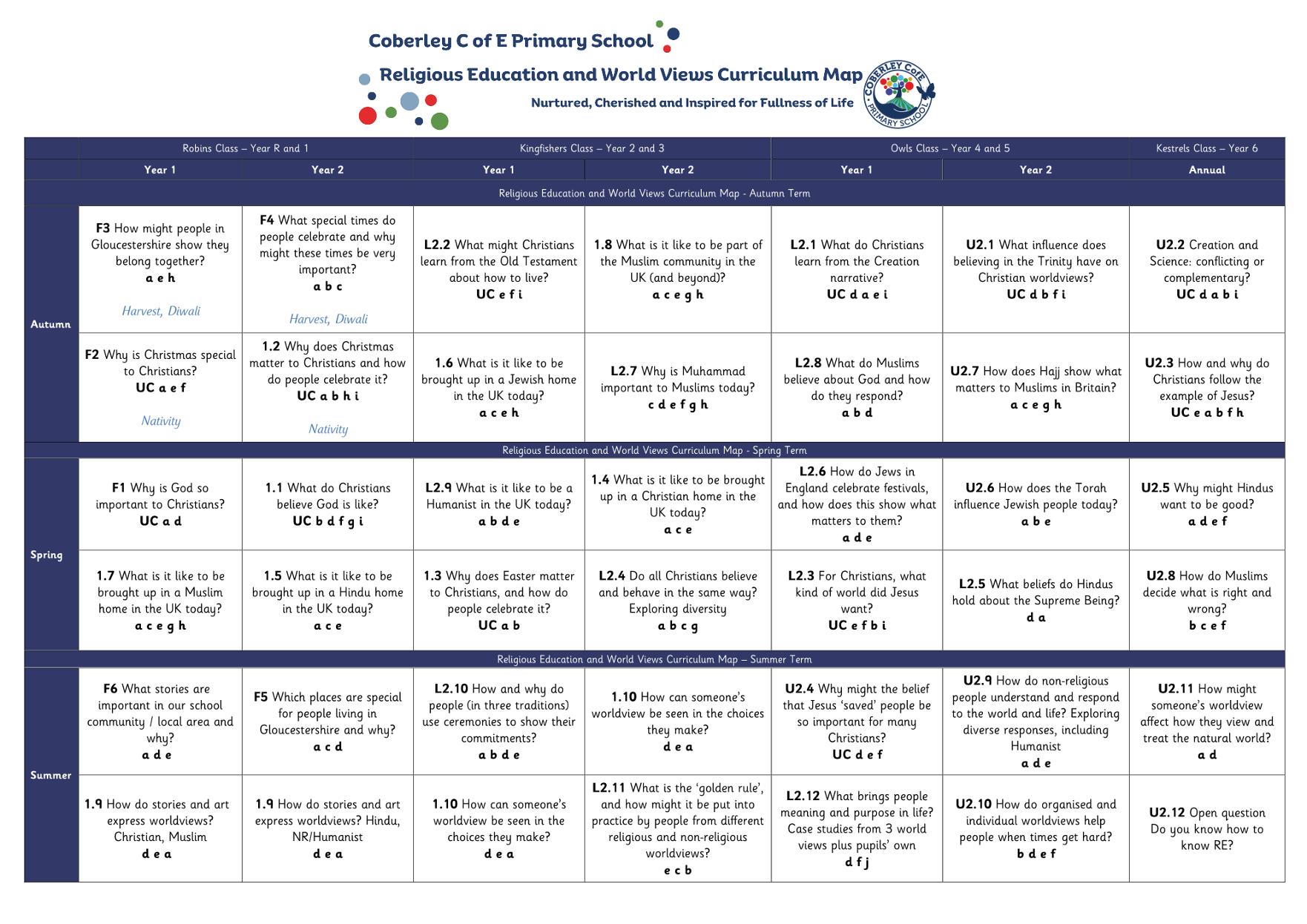
RE Curriculum Map | [pdf 155KB] |

|
Our teaching of RE & WV reflects our school’s vision to offer “Life in all its fullness” (John 10:10) nurturing spiritual, moral, social and cultural growth in every child. Through the Gloucestershire agreed syllabus of RE (2025) and using Understanding Christianity resource, we aim to help children:
- Gain a secure understanding of the beliefs, values and practices of Christianity, Judaism, Islam and Hinduism
- Explore non-religious world views like that of the Humanists and understand how different beliefs influence how people think, act and live.
- Reflect on questions of meaning, purpose and morality in the light of their own experiences, beliefs and that of others
- Develop the skills of enquiry, interpretation and reflection
- Show respect, tolerance and empathy for others, recognising the diversity of faiths and beliefs in our local and global communities
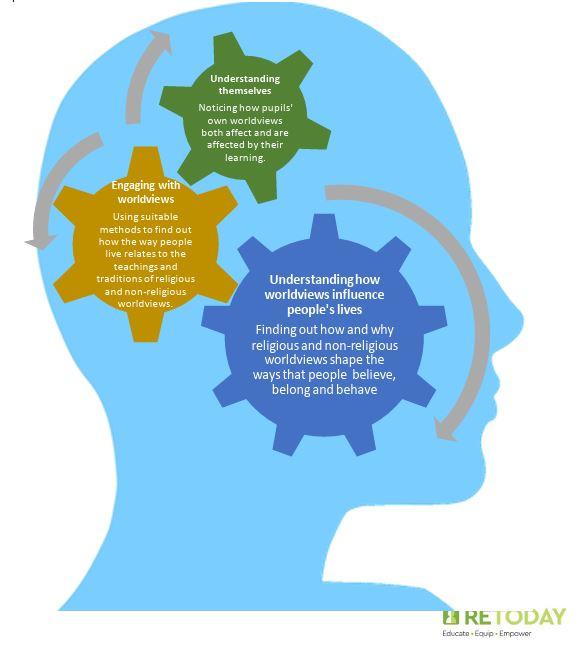
Following the Gloucestershire agreed syllabus (2025), which takes a religious and worldviews approach, teachers in Coberley enable the children to follow a cyclical journey where pupils first understand themselves, understand how worldviews influence people’s lives and then engage with the world views.
The curriculum is structured around three key strands:
- Content: Understanding through their RE lessons, key beliefs, teachings and sources of wisdom from the religions and non-religion taught. The children are often guided to draw comparisons and similarities (wherever possible) and understand the fact that all religions and non-religion want to make the world a better place. They are explicitly taught to consider both individual and organised world views, context, meaning and purpose, values and commitments, morality and how these views may influence others and may also be influence by.
- Engagement: Exploring diverse ways of knowing through lived in experiences, interviewing people of faith and non-faith and keeping it dynamic through constant dialogue and debate.
- Position: Reflecting on personal beliefs and experiences and connecting them with wider learning, understanding their own worldview in greater depth thus preparing them for life in an everchanging, diverse world.
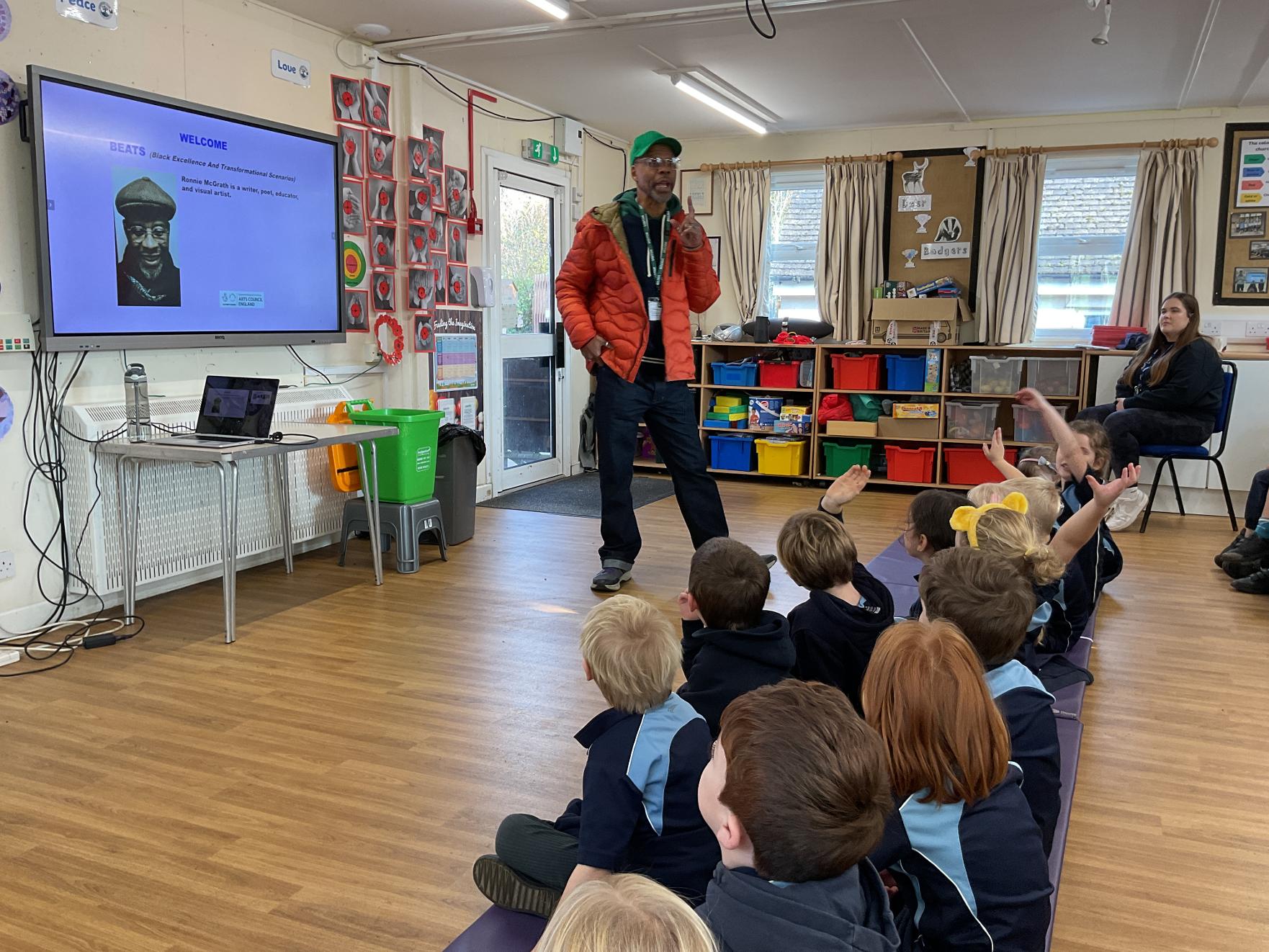
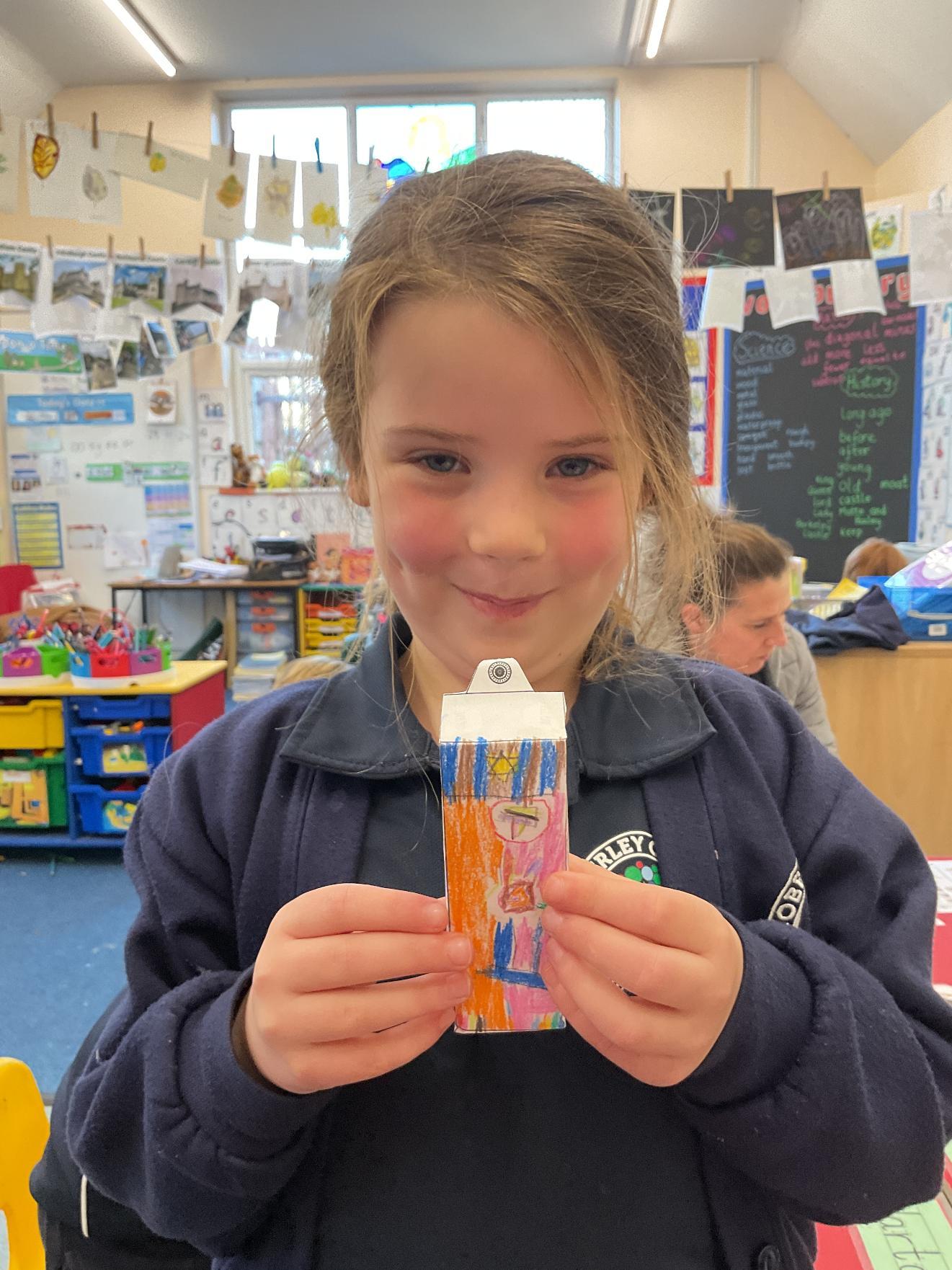
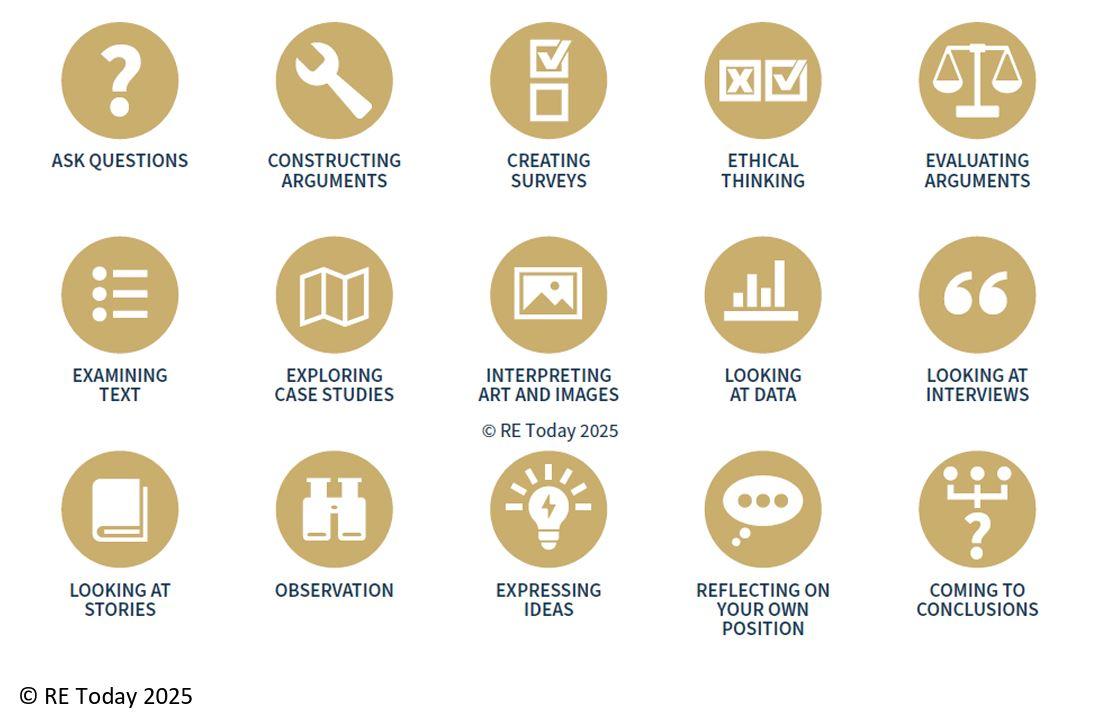
Revolving around a Big question, RE & WV lessons are interactive and thought provoking, encouraging discussion, questioning and reflection. We employ a variety of ways of knowing through stories, art, drama, visits to places of worship and by meeting people of faith or non-faith. These experiences help them to see how belief and worldview influence daily life, culture and community. To enable the children identify the ways of knowing, engaging and reflecting, we use icons developed by RE today.
Implementation in our school
As a Church of England school, Christianity is at the heart of our RE curriculum. The Understanding Christianity resource provides a clear and coherent framework for teaching about Christian beliefs, helping children explore the Big story of the Bible and understand how the beliefs shape everyday life.
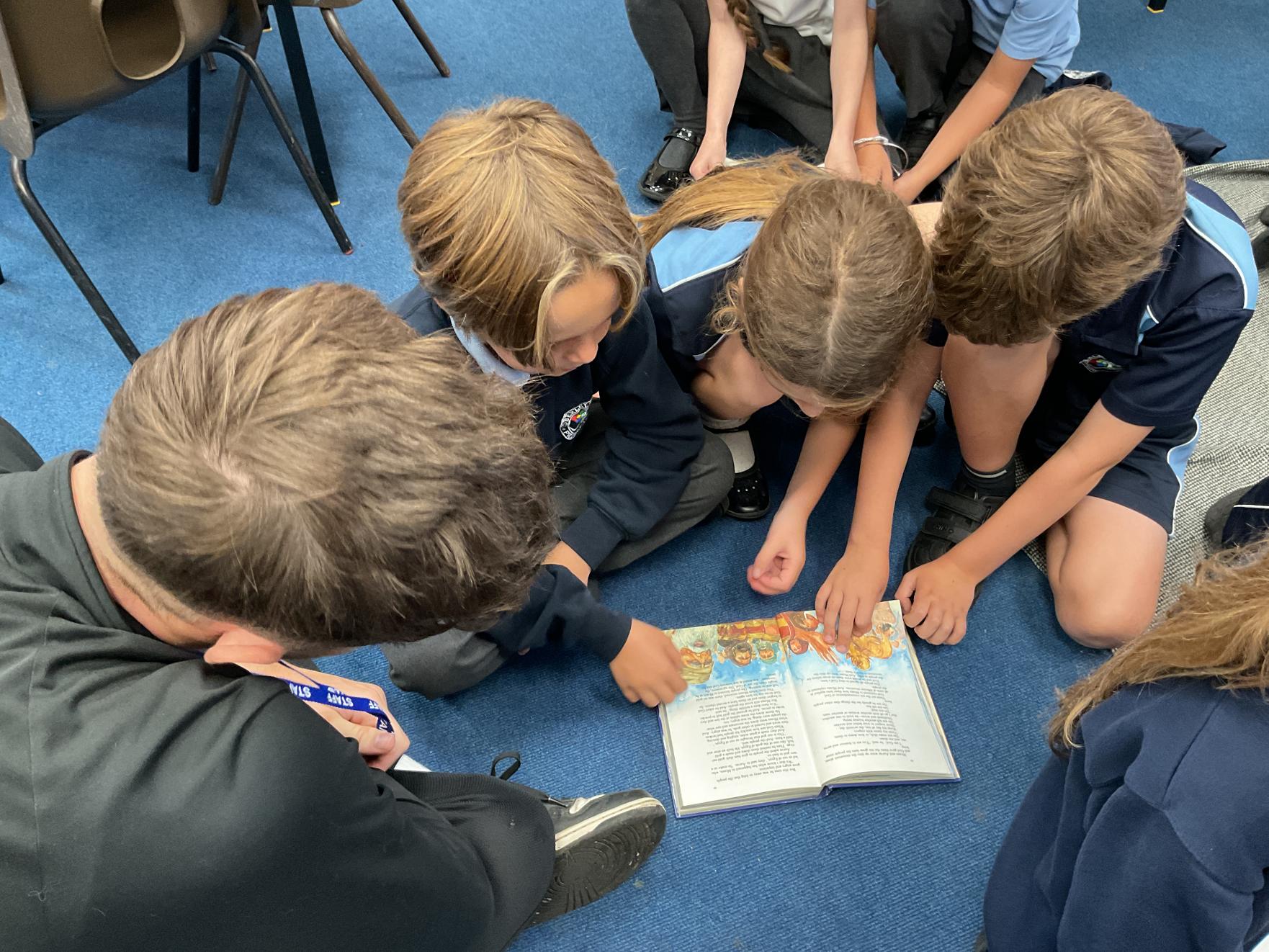
Alongside this, all children including those with SEND, explore Judaism, Islam, Hinduism and Humanism through carefully planned units that build understand and respect. RE is taught every week through discrete lessons, always keeping in mind children with SEND, allowing everyone the time required for understanding and reflecting. It is supported by discovering oneself spiritually through collective worship, welcoming people of both faith and no faith, Open the Book and visits to our local church for Harvest, Easter and Christmas services. Teachers inculcate in our children our five Christian values- Courage, Compassion and Kindness, Justice, Resilience, Respect and Honesty, weaving the values through the wider curriculum by using a range of strategies to ensure learning is accessible, engaging and appropriately challenging for all pupils.
To keep RE relevant and progressive, we work closely with the Gloucestershire Diocese, transitioning and adapting with the current changes in the RE curriculum and the new RE & WV approach. This interaction helps in facilitating Staff CPD, making both teaching and learning an enjoyable journey.
Impact and Assessment
Through our RE curriculum, we aim for children to:
- Develop a secure knowledge of Christianity and a clear understanding of Judaism, Islam, Hinduism and Humanism
- Speak confidently and respectfully about religions and non-religious beliefs
- Demonstrate empathy, open mindedness and the ability to reflect deeply
- Make thoughtful connections between faith, values and their own lives
- Live out the school’s Christian values in their relationships and decision making
Making learning accessible, teachers assess pupils through discussions, written work, reflection including artwork ensuring that progress is measured not only in knowledge but also in understanding and engagement.
Ultimately, Religious Education and World Views at our school endeavours in fostering pupils’ spiritual, moral and social development. It enables them to become more compassionate, well informed and reflective individuals who demonstrate respect for the views of others – including their own and who are equipped to engage confidently with people of faith and those of no faith in the modern world.
Withdrawal from Religious Education
Parents have the right to withdraw their child from all or part of RE.